

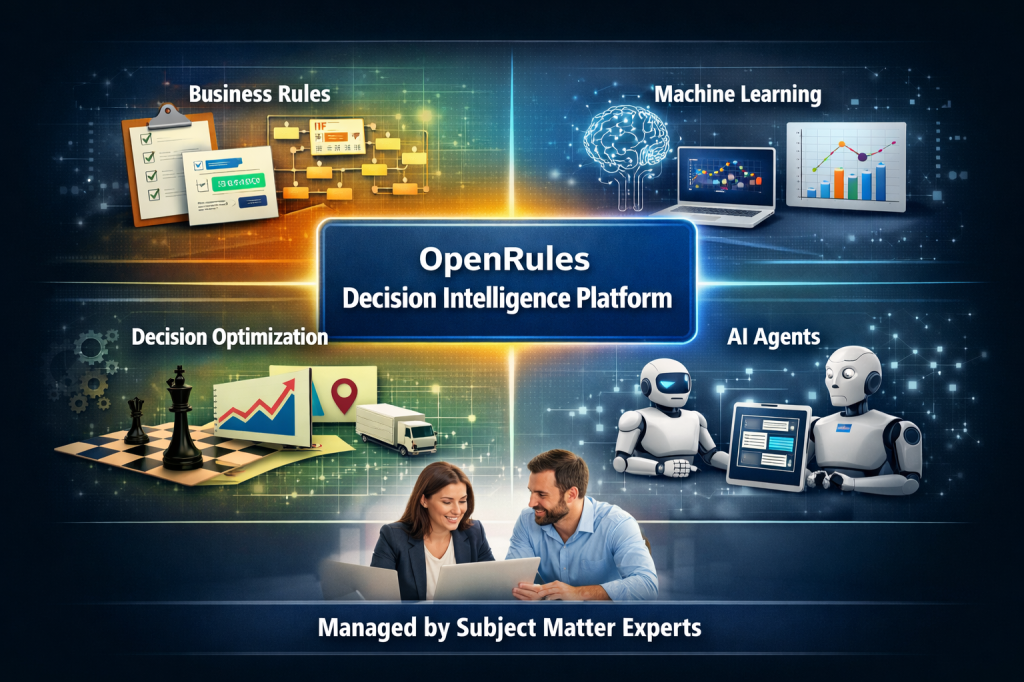
OpenRules started in 2003 as a powerful Rule Engine and has evolved into a comprehensive Decision Intelligence Platform that enables business analysts to represent complex business logic in intuitive Excel tables and execute it using highly efficient decision engines. Today, OpenRules is trusted by leading corporations and government agencies worldwide to power their mission-critical applications.
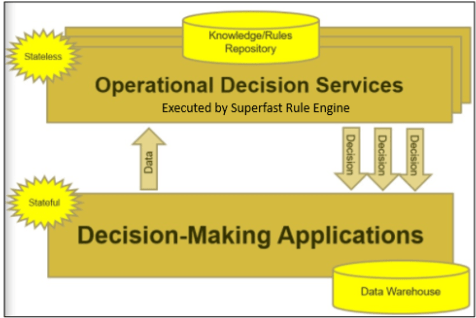
OpenRules provides a decision modeling environment for development of operational decision services for enterprise-level decision-making business applications. The top-level architecture is presented below, where a stateful decision-making application invokes stateless operational decision services.
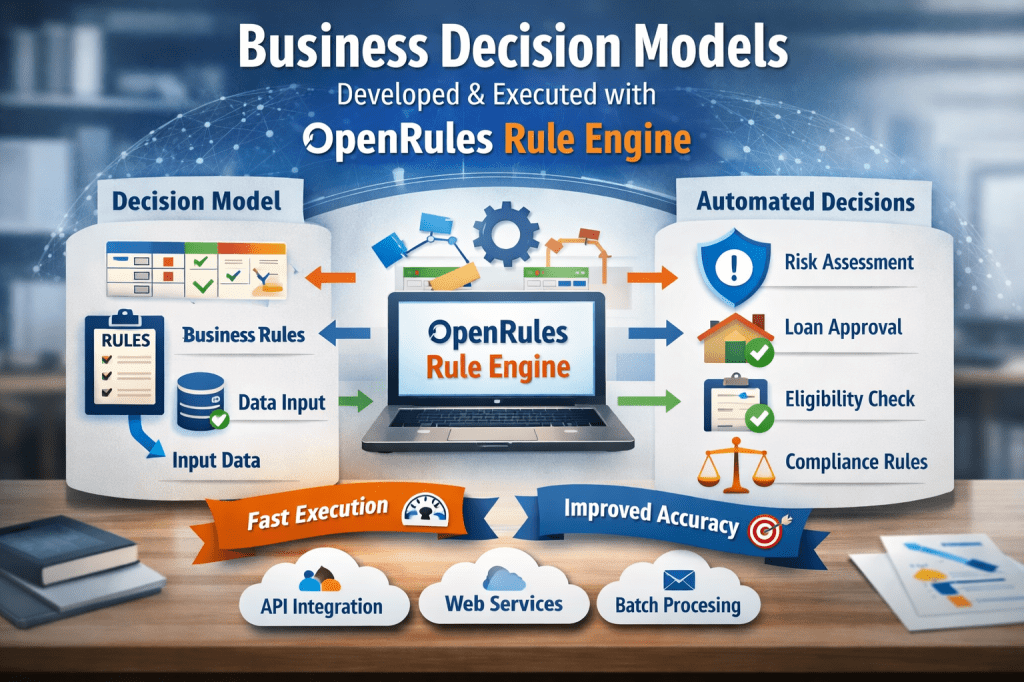
Decision services are based on business decision models usually created, tested, and maintained by business analysts in the Rule Repository using commonly known MS Excel (or Google Sheets) and OpenRules Decision Modeling IDE:

The lifecycle of a decision service is presented in this scheme:
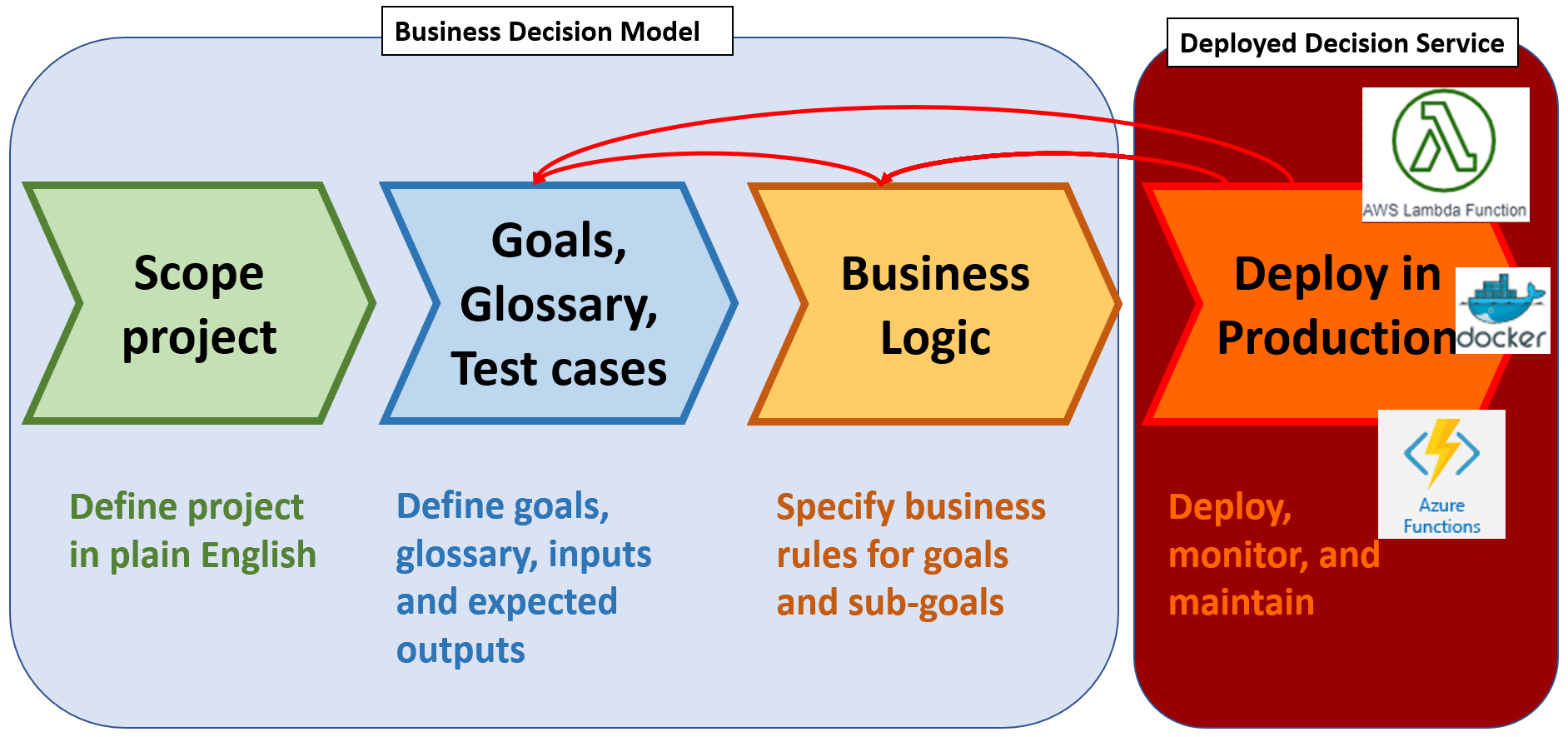
Tested decision models can be deployed on-premise or on-cloud using the standard frameworks provided by major cloud vendors:

With a push of a button you can deploy decision models as decision services using different Deployment Options.
Step-by-step development of decision services is described here.
OpenRules Decision Manager supports Serverless Architecture with multiple Decision Microservices. Enterprise-level Decision Models can be organized as sets of well-orchestrated decision microservices:

To support Service Orchestration, OpenRules provides special decision tables for assembling new decision services using the existing ones with orchestrating logic described in business rules. OpenRules supports the development of domain-specific libraries of decision services.
Start with examples of simple decision models and then switch to the development of your own Decision Services of any complexity.
 Decision Intelligence Platform